How Local SEO Helps Small Businesses Get More Leads in the USA
Local SEO creates more qualified enquiries by improving map visibility, local trust, and city-specific conversion paths.
Read insight

phone
+1 (727) 297-4842
Learn how US small businesses turn social media followers into paying customers through trust content, clear offers, conversion paths, and performance tracking.
Quick Summary
Followers become paying customers when social content builds trust, answers real buying questions, and sends people to clear next steps. Growth on social is only useful when it is connected to offers, proof, follow up, and tracking.
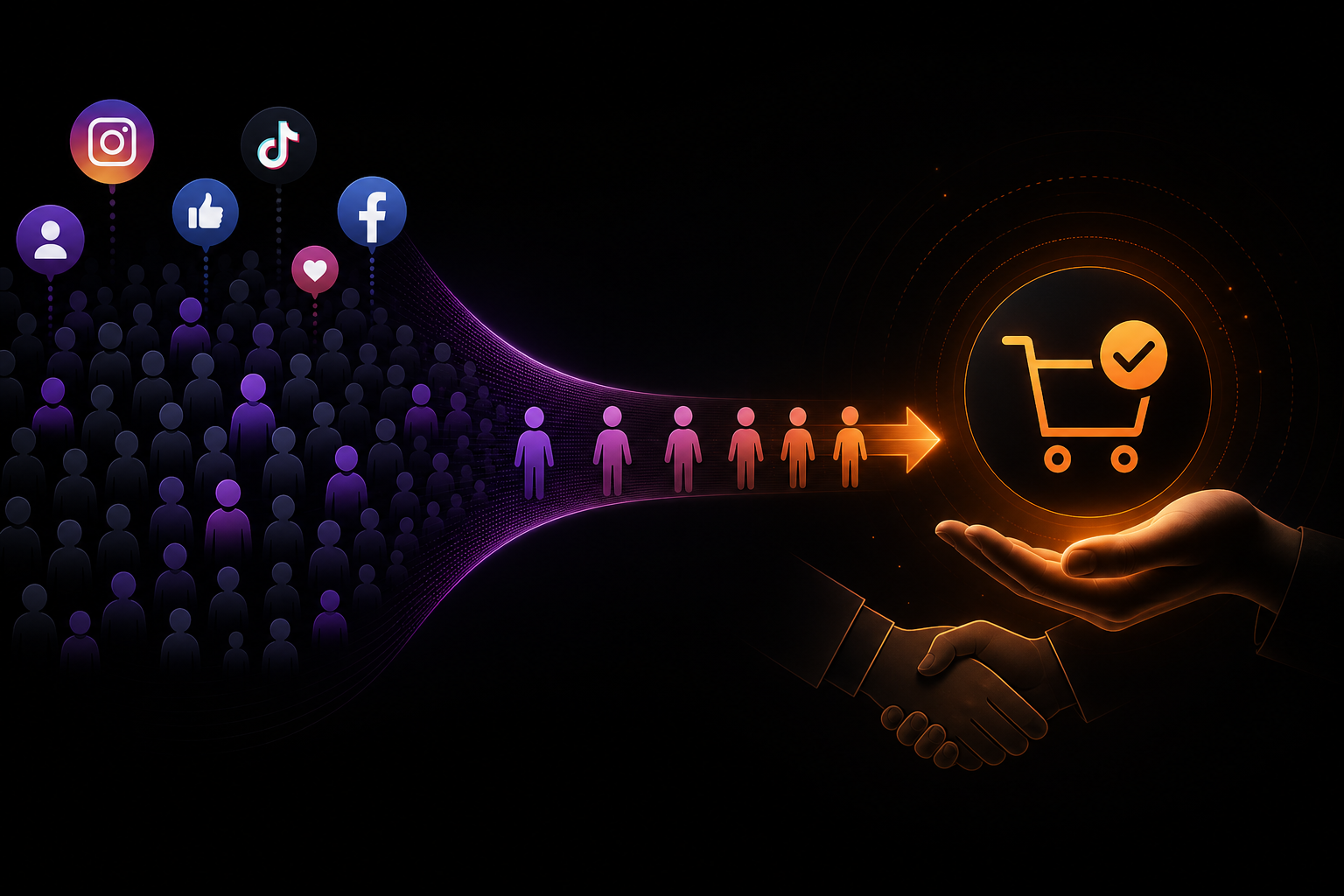
How to turn social media followers into paying customers is one of the most common questions US small business owners ask after they finally start getting attention online. The profile looks healthier. Reels or posts get more views. New people subscribe or follow. Then the owner checks revenue and wonders why the numbers do not match the growth on screen. This gap is normal because followers are not buyers by default. They are people who gave you a small signal of interest. Turning that signal into a sale takes a system.
The businesses that convert social audiences well usually do three things consistently. They publish content that reduces buyer doubt. They make the next step obvious at the right time. They follow up instead of assuming one post will close the sale. That is the real difference between business social media management that looks active and social media mgmt that supports revenue. If you want the channel to produce customers, not just engagement, you need to treat followers as people moving through a journey. This guide explains how to build that journey in a way that fits US small business markets, limited time, and real sales cycles.
A follower is a permission based relationship, not a transaction. Someone followed your page because a post was useful, entertaining, relatable, or relevant enough to keep you in their feed. That does not mean they are ready to buy today. It also does not mean they understand your full offer, pricing, process, or why you are safer than competitors. Many followers are still comparing options, learning the category, or waiting for the right moment. That is especially true for service businesses with higher trust requirements.
This is why chasing follower growth without a conversion plan often disappoints. You can win attention with broad content and still fail commercially if the profile does not guide people toward action. The goal is not to treat every follower like a lead. The goal is to identify which content themes attract the right people and which pathways move them closer to enquiry. Once you see social that way, follower growth becomes more valuable because you know what to do with the audience after they arrive.
Most conversion problems begin with content that speaks to only one stage of the journey. A feed filled with promotional posts may feel salesy to people who still need education. A feed filled with tips may build trust but never ask for action. Strong social programs balance awareness, consideration, and conversion content. Awareness content helps new people understand who you are. Consideration content answers objections, shows process, and builds confidence. Conversion content makes a specific offer easy to act on.
For a US home services company, that may mean project visuals for awareness, before and after explanations for consideration, and seasonal booking prompts for conversion. For a consultant, it may mean industry insights, client style case breakdowns, and a clear invitation to book a strategy call. The exact mix depends on the market, but the principle stays the same. Followers convert when the feed mirrors how real buyers think, not when it mirrors what is easiest to post.
People buy from businesses they trust, especially when the service is personal, expensive, or hard to compare. Trust content includes client results, process walkthroughs, team introductions, review highlights, FAQs, policy transparency, and educational posts that solve real problems without fluff. This kind of content does not always produce instant clicks, but it shapes the decision that happens later. When a follower finally needs your service, the brand that explained things clearly is more likely to win the enquiry.
Trust content also makes sales conversations easier. If prospects already understand your process, pricing logic, service area, or quality standards, your team spends less time overcoming basic doubt. That is one reason business social media management should be coordinated with website messaging and sales scripts. The social feed should not tell a different story than your service pages. Consistency across channels makes followers feel safer when they move from social to your site or inbox.
Many social conversions fail because the next step is unclear. A follower sees a strong post, visits the profile, and finds no link, weak highlights, or a bio that does not explain what to do next. On mobile, this friction kills results fast. Your profile should function like a small conversion hub. Use a clear bio, strong highlight categories, pinned posts, contact buttons, and links to the most important pages. If someone likes your content at 9 PM on a phone, the path to action should still be obvious.
That path often leads to a service page, booking page, lead form, or a specific offer page. The page itself must continue the trust built on social. Fast loading, clear headlines, visible proof, and a simple call to action matter enormously. If the website feels weaker than the social profile, conversions drop. Businesses often improve results by aligning social campaigns with stronger landing pages through web development support for conversion focused pages. Social can create interest, but the site closes the loop.
Not every conversion starts with a form. On many platforms, direct messages, comment replies, and saved posts are early buying signals. A follower who asks about pricing, service area, availability, or process is often much closer to purchase than someone who only liked a post. That means response quality matters. Slow replies, copy paste answers, or vague responses waste warm interest.
Train your team or agency to treat social interactions as micro sales conversations. Answer clearly, ask one useful follow up question when appropriate, and guide the person to the right next step. For example, if someone asks whether you serve their city, confirm coverage and offer the best page or booking path. If someone praises a project photo, invite them to see similar work or request an estimate. These small exchanges build momentum. Over time, they also reveal which questions repeat, which helps you create better content and stronger FAQs.
Followers rarely jump from casual viewing to a high commitment purchase without a bridge. Offers create that bridge. The right offer depends on the business. A clinic may promote a consultation. A contractor may promote a free estimate. A coach may promote a strategy session. A retailer may promote a first order discount or bundle. The offer should feel low risk enough for the follower’s current stage while still attracting serious interest.
Avoid weak offers that attract the wrong crowd. Freebie hunters can inflate engagement without creating customers. Strong offers clarify who the business is for and what happens next. They also give your team a cleaner way to measure social impact. If a specific offer produces enquiries from profile visitors, you know the audience and message are aligned. If not, you can adjust the creative, targeting, or landing page instead of guessing.
Many followers are not ready to buy the first time they interact with your brand. That does not mean the relationship is lost. Email capture, lead magnets, newsletter signups, and retargeting help you stay present while the buyer continues deciding. A follower who downloads a checklist, watches a case breakdown, or joins a simple email series can convert weeks later with much higher confidence.
This is where social works best as part of a larger system. A post can introduce the topic. A landing page can capture the lead. An email marketing nurture sequence can answer objections over time. Paid retargeting can bring warm visitors back to the offer. Businesses that only judge social by same day sales miss the fuller picture. The channel often starts relationships that other systems close. Connected planning makes that visible and repeatable.
Not every follower behaves the same way on every platform. Instagram users may discover visually and act through DMs or link clicks. LinkedIn followers may consume expertise content and convert through professional trust over a longer cycle. Facebook audiences may respond to local proof, community tone, and event style offers. The best format depends on where your paying customers actually come from. Repurpose wisely, but do not assume one post style fits all channels.
Test formats with a purpose. Educational carousels may build consideration. Short video may drive reach. Testimonials may reduce doubt. Live Q and A may surface buying questions. Pinned posts can hold evergreen conversion instructions. Use social media management platforms and native analytics to see which formats create profile visits, link clicks, and messages rather than only views. That data should shape the next month of content instead of letting the calendar run on autopilot.
If you want paying customers, track actions that indicate purchase intent. Useful metrics include profile link clicks, landing page visits from social, cost per enquiry from paid social campaigns, direct message volume, booked calls, coupon or offer redemptions, and lead source tagging in your CRM or inbox workflow. Follower growth should be tracked too, but as an audience indicator rather than the main KPI.
Review performance by content theme, not only by individual post. You may learn that process videos drive more site visits while client stories drive more messages. That insight helps you build a smarter content mix. It also helps you decide whether to keep handling social internally or work with a social media management service that reports on business outcomes. Before investing more, it helps to understand whether the channel itself is underperforming or whether the conversion system behind it is weak. Many owners find it useful to read whether social media management is worth it for small businesses in the USA before scaling spend.
One mistake is posting broad viral style content that attracts the wrong audience. Another is hiding the offer because the business fears looking too promotional. Some profiles look beautiful but rarely explain what they sell. Others send traffic to outdated pages with weak proof. Many owners also fail to respond quickly enough when interest appears. In US markets where buyers compare multiple providers fast, slow response alone can cost the sale.
Another common issue is disconnected branding. The social feed promises one experience and the website delivers another. Followers notice that mismatch immediately. Fix this by aligning visuals, tone, service language, and proof across social, landing pages, and follow up. When the experience feels coherent, followers move with more confidence. That coherence is one of the biggest differences between entertaining content and content that creates customers.
Turning social media followers into paying customers is not about tricking people into buying. It is about earning attention, building trust, making action easy, and following up with consistency. US small businesses win on social when they respect the buyer journey, publish with intent, and connect the feed to real conversion paths. Followers become customers when they can see proof, understand the offer, reach you quickly, and move to a page or process that feels credible.
If your audience is growing but revenue is not, audit the full path from post to purchase. Look at profile clarity, content mix, response time, offer strength, website quality, and tracking. Improve the weakest link first. For businesses that want a more structured approach, professional social media management for US businesses can help align content, community, and conversion strategy so follower growth supports actual customer acquisition instead of empty metrics.
Followers show interest, not purchase intent. Conversion usually fails when the profile lacks a clear next step, content does not build trust, offers are weak, or the website and follow up path are not aligned with social traffic.
Trust content such as process walkthroughs, client results, FAQs, testimonials, and educational posts usually performs best. Mix that with conversion content that makes a specific offer easy to act on.
Reply quickly to comments and direct messages, use clear profile links, send traffic to strong landing pages, support warm followers with email nurture, and track which posts create clicks, messages, and booked calls.
Not always, but many US small businesses convert faster with a structured content system, faster community response, and reporting that connects social activity to enquiries and revenue signals.
These articles support the same questions we solve across our main pages and services: ranking on Google, improving website performance, comparing channels, and generating better-fit leads.
Local SEO creates more qualified enquiries by improving map visibility, local trust, and city-specific conversion paths.
Read insightCompare theme based Shopify stores and custom Shopify development by cost, speed, flexibility, and conversion control.
Read insightSee when social media management pays off for US small businesses and how to measure ROI beyond likes and follower count.
Read insightThe better channel is not universal. It depends on timeline, budget, competition, and how fast the business needs qualified leads in the US market.
Read insightLet's Collaborate
