Is Social Media Management Worth It for Small Businesses in the USA?
See when social media management pays off for US small businesses and how to measure ROI beyond likes and follower count.
Read insight

phone
+1 (727) 297-4842
See how AI is changing custom web design in 2026 for US businesses, from smarter UX and faster builds to SEO-ready sites that convert more visitors.
Quick Summary
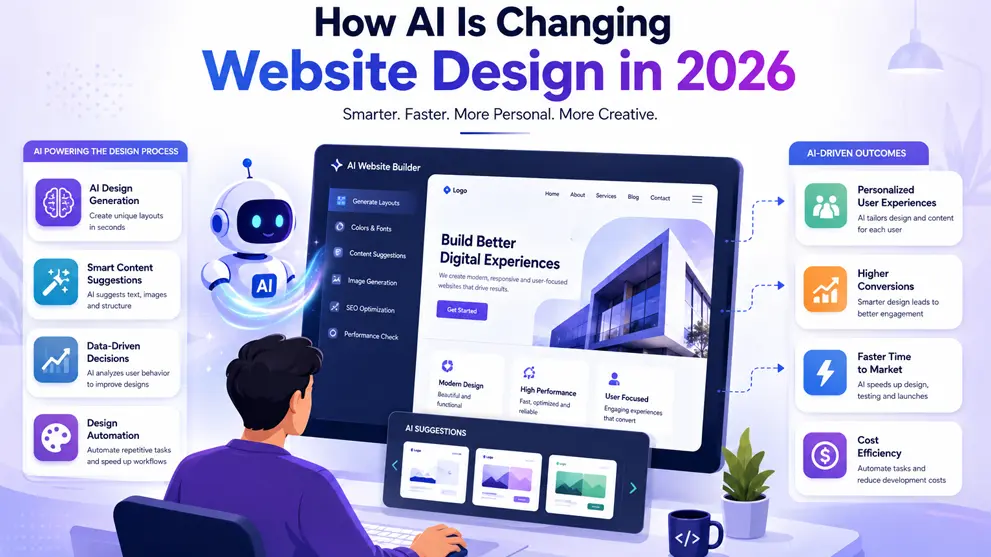
AI is changing custom web design in 2026 by making research, content planning, prototyping, personalization, testing, and optimization faster. The biggest wins come when AI connects website design and marketing with human strategy.
Custom web design in 2026 looks very different from the old process of choosing a template, writing a few pages, and hoping visitors understand the offer. AI tools now help teams research customer questions, compare page structures, draft content outlines, test messages, and spot usability issues before a page goes live. For US businesses, that changes the pace of website design and marketing because the site can be shaped around real intent much earlier in the project. A website development company that uses AI well can move from guesswork to evidence much faster.
The important point is that AI is not making thoughtful design less valuable. It is making weak design easier to expose. A generic page with AI written text still feels generic. A site that uses AI to understand buyers, clarify service pages, personalize journeys, and improve testing can perform much better. The difference comes from how the tool is used. In 2026, the best website projects combine AI assisted research with human judgment, brand understanding, accessibility standards, and clear lead generation goals. That is the difference between a generic AI draft and custom web design that supports a real US growth plan. For the wider craft picture, see the latest graphic design services trends shaping HQ custom design this year.
AI is changing custom web design by moving the early design process closer to real user behavior. Instead of starting only with visual preferences, teams can start with search patterns, sales calls, chat transcripts, support questions, competitor gaps, and conversion data. AI can group those inputs into themes that help a designer understand what the page must answer. That makes the first wireframe more practical because it reflects how people actually compare services.
For example, a website development company building a site for a legal practice in Texas may discover that visitors care about consultation speed, local experience, pricing clarity, and case type fit before they care about long firm history. AI can surface those patterns quickly, but the designer still has to decide how much space each message deserves, where trust signals belong, and what action the visitor should take next. That is where human design skill still matters.
The strongest design work now starts with better questions. Who is the visitor? What problem brought them here? What hesitation could stop them? What proof would help them move forward? AI helps organize those questions at scale, but the final page still needs a clear hierarchy, credible copy, and an experience that feels right for the brand.
Personalization used to be expensive and difficult for many small and mid sized businesses. In 2026, AI makes it more practical to show different messages based on visitor intent, traffic source, location, previous behavior, or service interest. A visitor who arrives from a local SEO query may need proof of local experience. A visitor from a paid ad may need a shorter path to a quote. A returning visitor may need comparison content or a stronger reason to contact the business.
This does not mean every page should change constantly or feel unpredictable. Good personalization is quiet. It removes friction. It helps users find the relevant service, answer, or next step faster. A web design and digital marketing agency should use personalization only where it improves clarity. If the experience becomes confusing, personalization becomes a distraction instead of an advantage. This is where a web design and digital marketing agency needs both data discipline and design restraint.
US buyers are more aware of automation than they were a few years ago. If a website feels manipulative, overly automated, or inconsistent from one visit to the next, trust can drop. The best use of AI is to make the experience more helpful, not more aggressive. That means clearer service paths, relevant proof, and calls to action that match the visitor's stage of decision.
AI design tools can now produce layout ideas, page drafts, content sections, images, and testing variations in a fraction of the time it once took. That speed is useful, especially during early exploration. A team can compare homepage structures, service page introductions, FAQ angles, or call to action options before committing development time. Faster prototypes help reduce guesswork.
The risk is that speed can create false confidence. A polished mockup is not the same thing as a strong website. Designers and website developers still need to check whether the layout supports the business model, whether the content matches search intent, whether the page works on mobile, and whether the experience guides users toward action. AI can create options quickly, but a website development company still has to choose the right business strategy.
One of the biggest changes in 2026 is that website design and marketing are no longer separate conversations. AI makes it easier to connect keyword research, ad insights, heatmap findings, customer objections, and page design in one workflow. That matters because a website is rarely just a brochure. For most US service businesses, it is a lead generation system.
If an HVAC company gets traffic but few calls, the problem may not be the ad campaign alone. The issue may be that the landing page does not show emergency availability, service areas, reviews, financing options, or a simple phone path. If a B2B consultant gets visits but no meetings, the site may fail to explain outcomes, process, and proof. AI can help reveal these gaps faster, while web development for conversion ready pages turns those findings into a working experience. The same conversion thinking applies to online stores, which is why it helps to understand what it costs to build a Shopify store that is designed to sell rather than just exist.
Small changes can now be tested with less manual effort. Teams can compare headline clarity, button labels, page order, FAQ placement, and form length. The best tests are not random. They come from real user questions and business goals. This is also why website projects should connect with analytics and reporting that measures lead quality, not just page views.
AI can draft page copy quickly, but that does not mean every draft is useful. Many AI generated website pages sound fluent while saying very little. They repeat broad claims, avoid specifics, and fail to answer the questions that real buyers ask. In competitive US markets, that is not enough. A strong service page needs original insight, proof, process details, local or industry relevance, and a clear offer.
The better workflow is to use AI for research, structure, and first pass organization, then refine the content with real business knowledge. A page about custom web design should explain who the design is for, how decisions are made, what performance issues are considered, and how the finished site supports search, trust, and conversion. A page that only says modern, responsive, and professional will blend in with every other provider.
AI can help flag contrast problems, missing alt text, unclear labels, thin headings, and potential usability issues. That is valuable, but it should not be treated as a complete accessibility guarantee. A design still needs semantic structure, keyboard support, readable content, sensible focus states, and testing with real user needs in mind. Automated checks can catch many issues, but they do not replace careful implementation.
This matters because AI powered design systems can create many page variations quickly. Without quality control, teams can accidentally publish inconsistent layouts, weak headings, or content that does not match the brand. In 2026, the best website developers will use AI as a review assistant while keeping human standards for accessibility, speed, security, and maintainability.
AI search experiences are changing how people discover websites. Search results now include summaries, follow up paths, source links, ads, local results, and more exploratory journeys. That means website design has to support both human readers and machine understanding. Clear headings, helpful answers, structured data, internal links, original examples, and authoritative service pages all matter more when search engines and AI systems need to understand what a business actually does.
AI can help plan these elements, but it can also create SEO risk if teams publish shallow pages at scale. Search visibility still depends on usefulness, trust, and clarity. A useful website answers the buyer's question, shows evidence, explains the next step, and connects related pages in a logical way. For a broader search strategy, it helps to pair custom web design improvements with SEO services that strengthen site structure and content intent.
A local medical practice can use AI to review patient questions and turn them into clearer service page sections, appointment prompts, and FAQ content. The final design may show insurance details, treatment expectations, provider trust signals, and mobile appointment paths more clearly. That is not just a visual improvement. It removes hesitation from the patient journey.
A B2B software company can use AI to compare demo requests, sales objections, and product usage patterns. The website can then separate pages for finance buyers, operations teams, and technical evaluators. Each path can use different proof and calls to action while staying within the same brand system.
A home services company can use AI to identify which city and service combinations produce the best enquiries. The site can prioritize those pages, improve local proof, and connect blog content to service pages. That same logic supports the lead generation principles covered in how to get leads from Google in 2026.
AI will not fix an unclear offer, poor positioning, weak follow up, slow approvals, or a business that does not understand its best customer. It can make these issues visible, but it cannot solve them without decisions from the team. If every competitor says the same thing, AI may repeat the same claims unless the business provides real differentiation.
It also will not replace experienced creative direction. A good designer knows when a page needs more restraint, when a visual idea distracts from the conversion path, and when the brand needs more personality. AI can suggest options, but judgment decides what belongs on the final website. The best results come from using AI to reduce busywork so more time can go into strategy, design polish, and measurable outcomes.
AI is changing website design in 2026 by making the process faster, more data aware, and more connected to marketing performance. It helps teams understand users earlier, test ideas sooner, personalize journeys more carefully, and improve content structure before launch. For US businesses, that can mean better pages, stronger search visibility, and more qualified leads.
The strongest websites will not be the ones that simply use the most AI. They will be the ones that use AI with clear strategy, strong design judgment, accessible implementation, and practical measurement. If your site needs that kind of improvement, start with a focused conversation through the contact page for a website strategy review.
AI will not replace skilled website designers for serious business sites. It speeds research, drafts, testing, and content planning, but human strategy still drives brand fit, accessibility, conversion logic, and quality.
Small businesses can use AI in custom web design to analyze customer questions, draft page outlines, test calls to action, personalize content by intent, and find usability issues before launch.
AI can help SEO when it improves content structure, internal linking, page clarity, schema planning, and user experience. It hurts SEO when it creates generic copy, weak facts, or duplicate pages.
Avoid generic layouts, inaccurate copy, weak accessibility, duplicate pages, and designs that ignore search intent. Custom web design still needs human QA, brand alignment, and conversion strategy.
These articles support the same questions we solve across our main pages and services: ranking on Google, improving website performance, comparing channels, and generating better-fit leads.
See when social media management pays off for US small businesses and how to measure ROI beyond likes and follower count.
Read insightRanking on Google in the United States takes more than keywords. It takes local intent alignment, trust, content depth, and strong technical foundations.
Read insightThe better channel is not universal. It depends on timeline, budget, competition, and how fast the business needs qualified leads in the US market.
Read insightGoogle lead generation works when visibility, trust, and conversion design are treated as one system instead of separate marketing tasks.
Read insightLet's Collaborate
